
The Mr Soot team sees bird nests all the time. But they’re usually confined to certain geographical areas.
So in this article, we’ll reveal exactly where they are – and how YOU can prevent becoming a victim of nesting Jackdaws.
But first, it’s important to understand the reasoning for their habits.
Which Birds Nest In Chimneys?
Firstly, not ALL birds will nest in chimneys.
For instance, pigeons won’t nest in them as their wing span is too big for the size of the flue (some older chimneys are only 9″x9″ – not enough space for them to get enough ‘lift’).
Pigeons can end up in chimneys, but it’s usually because they’ve fallen down them – in which case a professional sweep can help.
One of the most common types of birds to nest in chimneys is Jackdaws. These very noisy creatures love bedding down in chimneys, as do Starlings and Rooks.
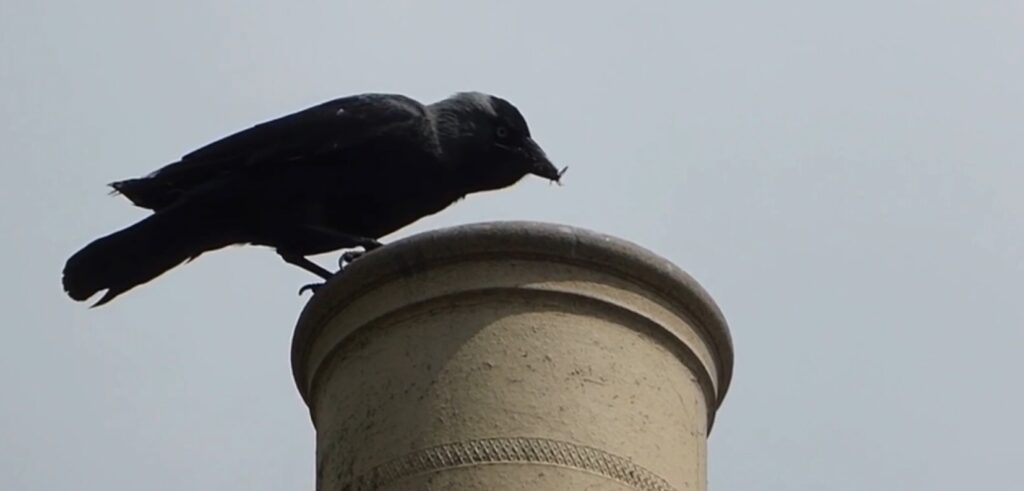
Why Do Birds Build Nests In Chimneys?
Like any living creature, birds require warmth, shelter and protection – something chimneys offer in abundance. They are the perfect place to build a nest, lay their eggs and – after a few months – look after their young.
Nests in trees are open to the elements and attack from predators. Chimneys, on the other hand, much more protection.
What Type of Chimneys Do Birds Target?
In our experience, birds do have a habit of nesting in older chimneys connected to little-used open fires, most notably gas fires.
These are exceptionally popular because not only are they unlikely to be disturbed, but the design of the chimneys really does lend itself to nesting, with nice bends on which to build a nest and enough room to fly out easily.
Sometimes they’ll nest in more modern chimneys as well, especially clay lined chimneys, connected to little-used gas fires.

What Do Birds Use To Build A Nest In A Chimney?
Birds are industrious and resourceful creatures, so will use pretty much anything to build nest. Aside from the traditional twigs and straw, we’ve found cigarette ends, part of an old car aerial, mesh and even a business card from a local chimney sweep to build a nest!
These nests can vary in size but it’s not uncommon for us to remove two-three wheelie bins full of debris from the chimney.
Customers are always amazed, as they’re expecting a small nest which you can hold in your hand.
If only it were that simple!
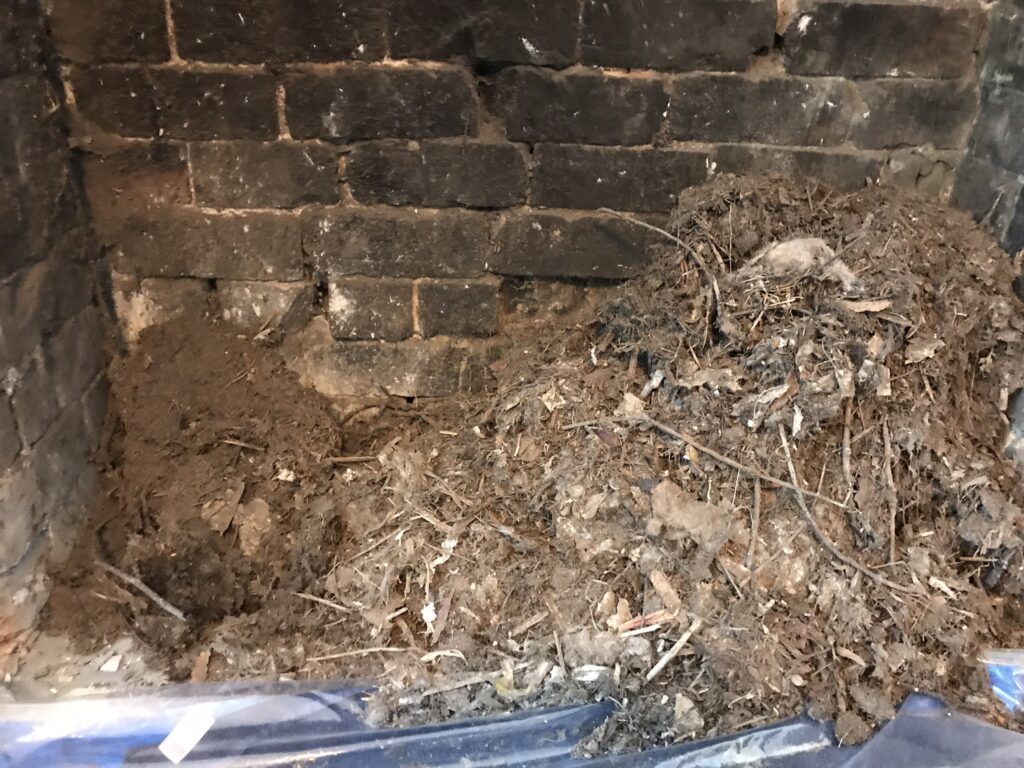
How Do Birds Actually Build A Nest in A Chimney?
They’ll usually start by collecting large twigs and dropping them down the chimney. The twigs usually get lodged on a bend, which most chimneys have.
From there, they build a base of larger twigs until the ‘foundations’ are complete.
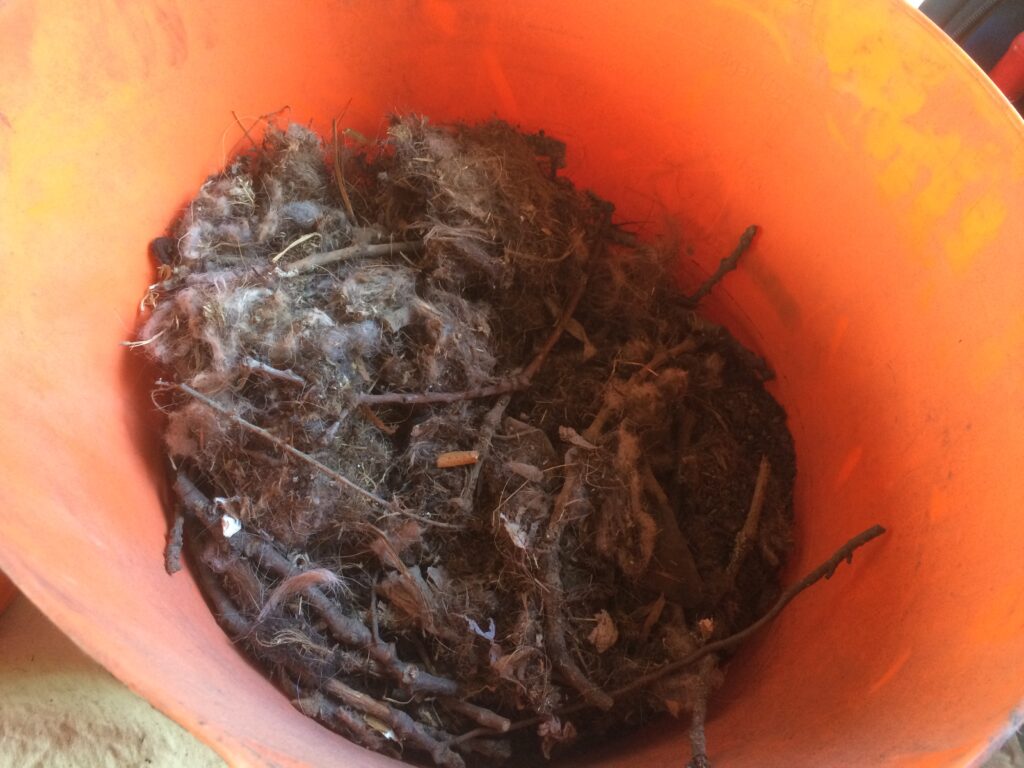
They’ll then start gathering smaller twigs and then eventually stuff such as straw, feathers and even twine for the bedding.
When Are Birds Most Likely To Start Nesting?
The ‘nesting season’ can vary from area to area. Generally, birds will start scoping out chimneys as early as January, and nest building can start from February/March onwards.
They’ll usually be gone again by August/September time, but there are certain laws governing bird nests, as we discussed here…
Which Areas Are Most Common For Bird Nests?
Generally, nesting birds aren’t found in city centres. So you’ll rarely see one in London for example. On our ‘patch’ in the North West of England, Liverpool and large parts of Manchester and Preston are the similarly nest-free.
However there are some areas outside of the major cities which are rife for them, and we’ve listed them here:
Wigan: Swinley, Shevington, Standish, Wigan Lane and Appley Bridge
Stockport: Romiley, Marple, Mellor, Strines, Compstall, Bramhall, Cheadle, Cheadle Heath, Hazel Grove (particularly along the A6)
Manchester: Chorltonville
Chorley: Mawdesley and Croston
Cheshire West: Poynton
West Lancashire: Parbold, Newburgh, Wrightington, Rufford. Burscough
Sefton: Crosby, Formby, Hightown
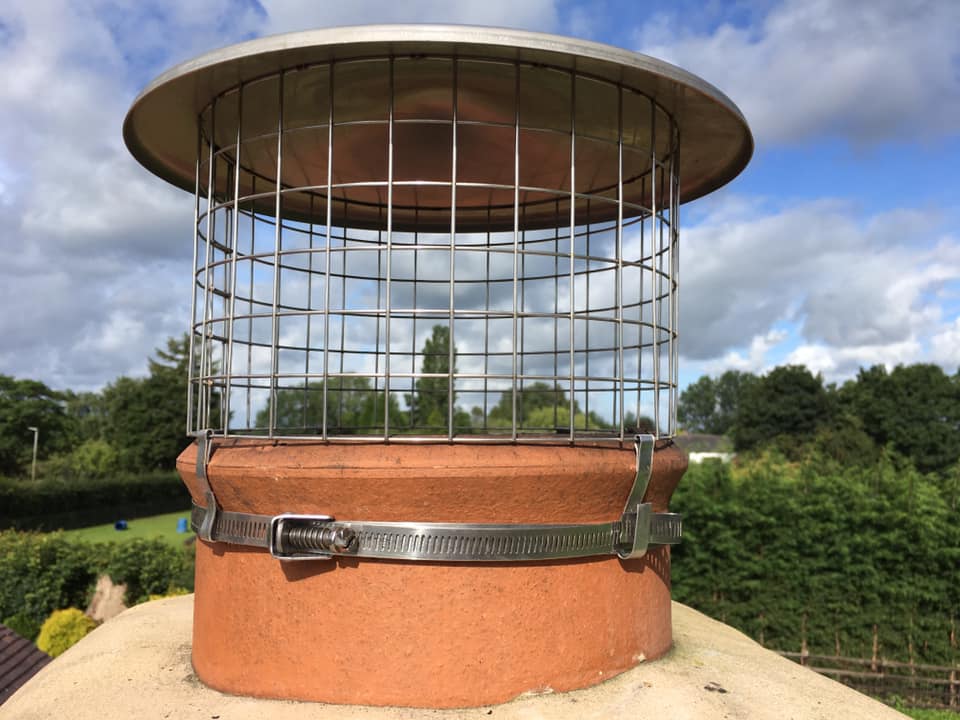
How Can I Stop Birds Nesting In My Chimney?
The most straightforward way is to have an appropriate, sturdy birdguard fitted. These come in various shapes and sizes, so please consult your a local professional chimney sweep for the best option for your installation,
Birds are massively territorial and – as the video below shows – they really do seek to ‘colonise’ areas. If you have a nest removed, they’re very likely to return unless you get a suitable guard fitted.
And if you live in an area where they are active, then prevention is definitely better than cure!
